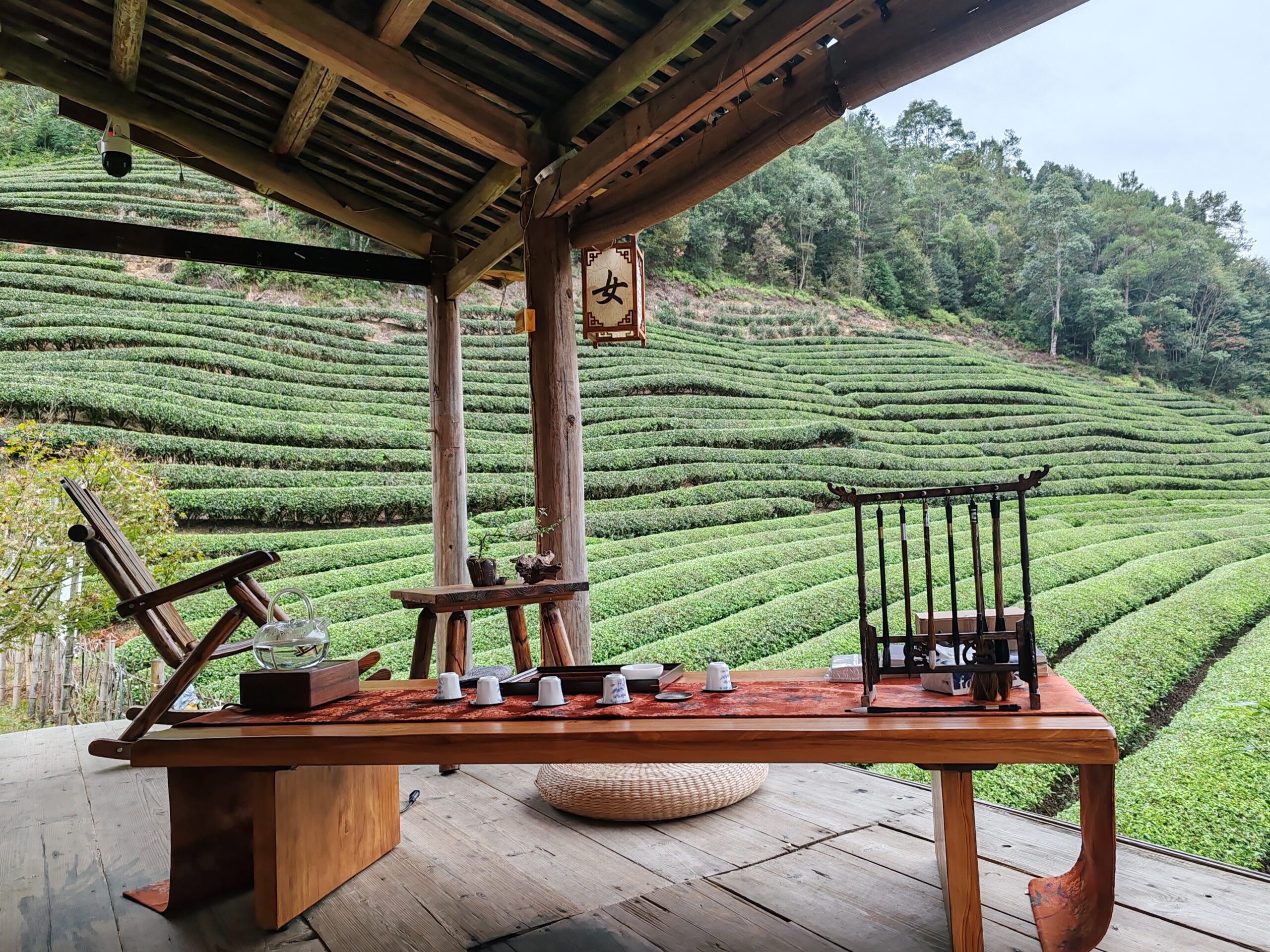

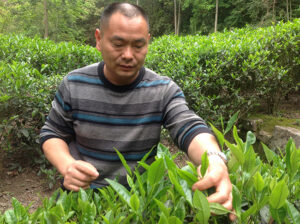
Zhou Yousheng and Huang Shiying, a husband and wife team, were both born and raised making tea with their families in the countryside of Wuyishan. Their tea factory lies next to the Jiu Qu (Nine Bends) River. Zhou Yousheng is always in the garden unless he’s overseeing the oxidation and roasting of the tea. Huang Shiying is both manager of the tea garden and the company, hiring workers for harvest and transportation, and arranging meals for them during the tea season. Their teamwork has become a strong model for countryside tea producers in recent years.
Zhou Yousheng was born in 1971, the youngest of seven children in a tea-farming family from the rural outskirts of Wuyishan City. Growing up, he was around tea every day, but his path was different than that of his siblings. Thanks to his older siblings managing the family farm, Zhou was able to remain in school until he was 16. Staying in school as long as he did was a privilege in itself at the time, so when he inevitably left school to work with his parents and siblings, he brought with him not just a love for tea, but a broader education that would later help him experiment, refine, and raise the quality of both his tea garden and his craft.
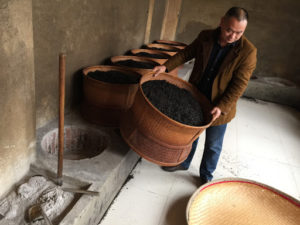
The Zhou family have made tea in Wuyishan for generations. Here, Zhou learned the traditional style of making rock wulong tea. He maintains traditional methods of drying wulong by charcoal roasting over two to three months, a technique that has become more and more rare. His farm is not far from the historic Tongmu Village, where black tea was invented, and he has had the opportunity to become familiar with black tea production methods as well. However, wulong tea remains his area of expertise. Drinking Wuyishan wulongs every day, he has a long familiarity and passion for the technique and unique flavor; his favorite tea being Laocong Shuixian (Old Bush Narcissus).
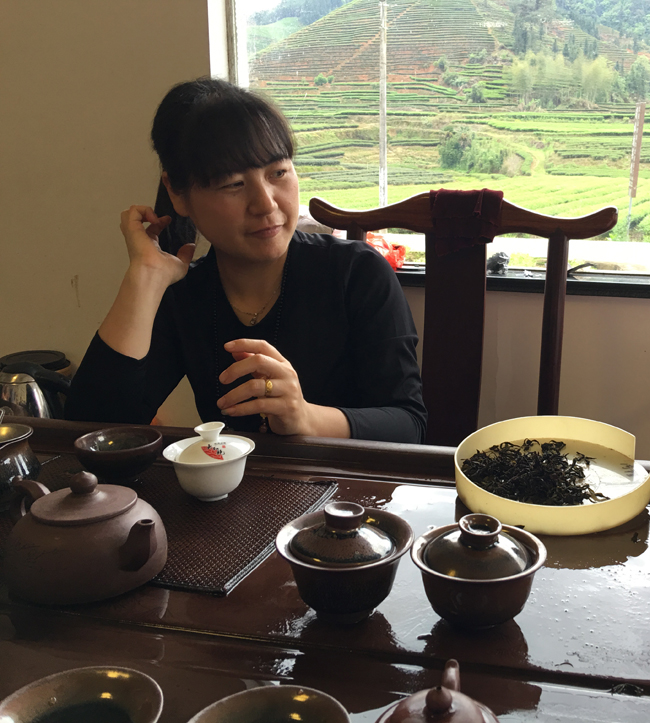
Huang Shiying, Zhou’s wife, was born in 1976 in the Wuyishan City countryside to an old tea-making family. Her mother’s backyard holds the region’s oldest known Shuixian (Narcissus) bush, named Qian Long Gucha (“King of Shuixian”) bush, named after the Qing Dynasty emperor. Each spring, before harvest begins, the leaders of the village perform a tea-offering ceremony to the bush, asking for a good harvest and good fortune.
Huang’s family has passed down their skill and craft for generations, longer than anyone can remember. From a young age, she often accompanied her family to harvest tea leaves, and by age eleven, she began formally learning the craft. What started as duty soon became devotion. Her joy and love of tea is quite evident today, especially in the moments watching her make tea, sitting on a rock in Wuyishan. She has earned several qualifications, such as National Level 1 Tea Appraiser, Senior Tea Master, and Senior Processor.
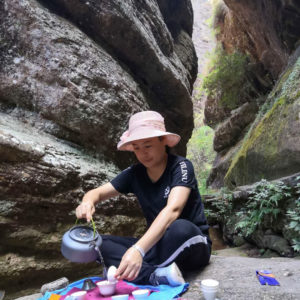
Huang Shiying has shown unwavering dedication to the process of tea and the maintenance of her gardens, choosing harvest days with precision and carefully watching the withering process, which she calls “the true embodiment of traditional craftsmanship.” She believes this careful withering step preserves the tea’s unique, delicate character and is crucial to make excellent tea.
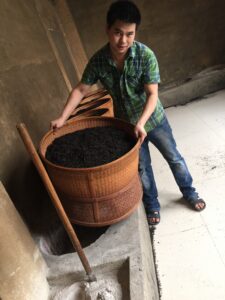
Zhou and Huang grew up in different villages, but only 8 km apart. Their families remain very close, sharing meals together often. They have two daughters and made it a high priority to give their children the option to choose their own path and the eldest is now a math teacher in Wuyishan City. Zhou Yousheng began teaching his nephews, Zhou Xiping and Zhou Jun, to traditionally charcoal roast tea when they were 16. Zhou Jun and Xiping now have their own company only roasting tea for other farmers.
Through their hard work, they were able to send both daughters to university, and build a small teahouse overlooking the gardens, a beautiful place to share tea with friends and family. Zhou Yousheng and Huang Shiying are an example of what modern tea families look like in China after the privatized market opened in the 1990s.
More on rock wulong tea!