
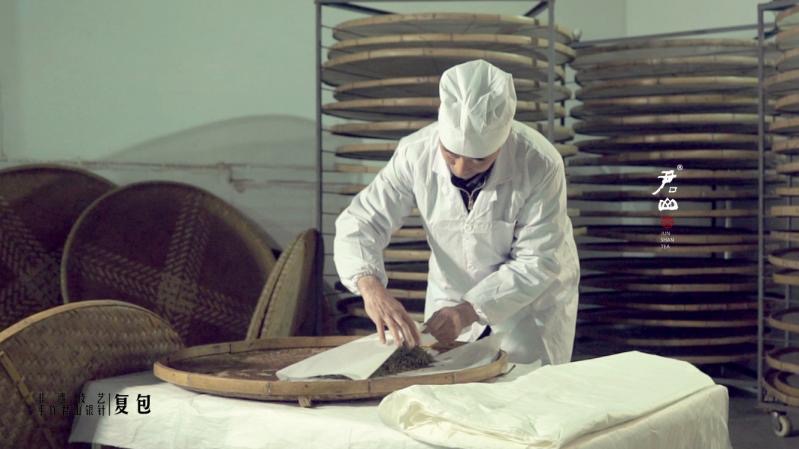
Gao Xiaozu is a tea maker at the Hunan Province Tea Research Center, a center that studies the many varieties of tea that grow on Junshan Island, and is a national inheritor of Intangible Heritage of Junshan Yinzhen yellow tea processing.
As a teenager, Gao began learning to make tea from his father during the Chinese Cultural Revolution in the late 1960s due to lack of job opportunities. As a teenager, he wanted to be able to choose another path, but he’s very grateful today for the life he has and a deep appreciation for his father and other tea makers who taught him to make tea. During his career at the Hunan Tea Research center, he has mastered all 20 steps of making Junshan Yinzhen yellow tea and has established the operational standards for the traditional production process of Junshan Yinzhen yellow tea that are currently used.
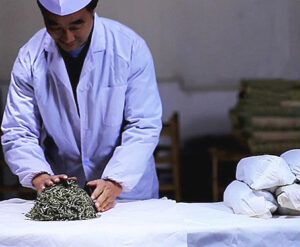
It may seem redundant and excessive to continuously qualify Junshan Yinzhen with “yellow tea,” however it’s an important distinction from the more commonly known Junshan Yinzhen green tea. Yellow tea in China continues to be a difficult market. When Zhuping first traveled to Junshan Island in 2007 in search of authentic yellow tea, she was pointed to Gao’s company, as one of the only yellow tea producers on the island. However, even in Gao’s company, yellow tea is only produced as a special order due to its labor intensive process, requiring around 72 hours of work, and difficulty selling it. Even today, yellow tea is often mistaken for old green tea, and paired with a high selling point, it’s a recipe for assuming the tea is a rip off.
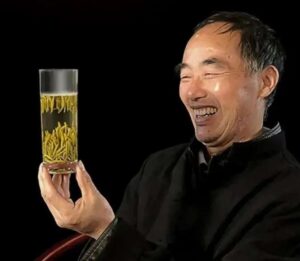
Despite this, the market for yellow tea has grown massively since the 2010s, bolstered by online recognition and appreciation. Today there are more than 10 yellow teas on the market!
This increase in popularity, though not nearly as much as other tea categories, has continued to support the advancement of tea farming families in China, sustaining cultural heritage, and keeping distinct tea processes alive that were once at risk of disappearing.